
Struggling to stay asleep through the night? You’re not alone. Sleep disruptions affect millions of adults, especially as we age, navigate stress, or shift through hormonal changes. But what if the solution to deeper, more restful sleep was as simple as taking a walk after dinner?
According to sleep medicine and menopause physician Dr. Andrea Matsumura, an evening walk can do more than just help digest your food; it can help you fall asleep faster, stay asleep longer, and wake up feeling more refreshed.
“Walking in the evening lowers stress,” says Dr. Matsumura. “It helps balance glucose levels and may help regulate your circadian rhythm—all of which promote better sleep.”
Let’s explore how a simple evening stroll can transform your nights and improve your overall well-being.
How Evening Walks Improve Sleep
1. Natural Stress Relief
Physical activity, especially gentle movement like walking, helps reduce cortisol (the stress hormone) and boosts feel-good endorphins. When done in the evening, it can help signal to your body that it’s time to wind down.
“Walking outdoors after dinner gives your nervous system a chance to shift out of ‘fight-or-flight’ mode and into ‘rest-and-digest,’” says Dr. Matsumura. “This is essential for falling and staying asleep.”
Why this matters for staying asleep:
Sleep maintenance issues (waking up and not being able to return to sleep) are often linked to “activation” in the body—stress chemistry, tension, and an over-alert nervous system. A gentle walk can act like a bridge between the demands of the day and the calm your body needs at night.
Try this during the walk:
- Slow your pace slightly for the last 2–3 minutes
- Relax your shoulders and jaw
- Let your eyes “soften” (a simple way to reduce mental intensity)
These small changes can make the walk more regulating (and less stimulating).
2. Supports Your Circadian Rhythm
Your circadian rhythm (your internal clock) is strongly influenced by light and movement. Exposure to dim natural light during dusk helps cue melatonin production—the hormone responsible for sleepiness.
Walking outside in the evening provides subtle light cues that tell your body, “The day is ending. Time to prepare for sleep.”
Make this effect stronger:
- If you can, walk outdoors (even a short loop counts)
- When you get home, dim lights to “match” the evening signal
- Avoid bright overhead lighting and phone scrolling right after your walk
Think of it like this: your body responds best when your signals agree—dusk outside, dim inside, quiet routine.
3. Aids Digestion and Prevents Discomfort
Heavy meals before bed can lead to indigestion or reflux, which are common culprits of nighttime waking. A post-meal walk can gently stimulate digestion and reduce symptoms of bloating or heartburn.
“A 10- to 20-minute walk after dinner can significantly reduce GI discomfort that might otherwise keep you up at night,” notes Dr. Matsumura.
Why digestion matters for uninterrupted sleep:
If reflux or bloating shows up at night, it can trigger micro-awakenings (even if you don’t fully remember them). Supporting digestion earlier in the evening can reduce one common reason your body “checks in” overnight.
If reflux is a pattern for you:
- Keep the walk easy and upright (no intense hills)
- Try walking sooner after dinner rather than right before bed
- Notice whether certain foods/alcohol correlate with waking
Evening Walk Tips for Better Sleep
1. Keep it Gentle
This isn’t the time for high-intensity exercise. A relaxed, moderate pace is best. “The goal is to soothe your system, not rev it up,” says Dr. Matsumura.
A simple intensity test: you should be able to hold a conversation without feeling breathless.
2. Be Consistent
Aim for a walk around the same time each evening to help reinforce your body’s bedtime rhythm. Even 15 minutes a day can make a difference.
If consistency is hard: anchor it to something that already happens (e.g., “right after dinner” or “after I clean the kitchen”).
3. Go Tech-Free
Skip the earbuds and screens. Use this time to be present, observe your surroundings, and let your brain unwind.
If silence feels uncomfortable, choose something low-stimulation—calm music rather than activating podcasts or news.
4. Make It a Ritual
Pair your walk with other relaxing bedtime habits—like dimming the lights when you get home, sipping herbal tea, or doing light stretching—to reinforce your body’s transition into sleep mode.
Example ritual (10 minutes total after the walk):
- Dim lights
- 2 minutes of stretching (neck/shoulders/hips)
- Warm drink or warm shower
- Same “closing cue” each night (book, breathwork, or quiet)
A Little Walk Can Go a Long Way
You don’t need to overhaul your entire bedtime routine to sleep better—just lace up your shoes and take a stroll. By incorporating a simple evening walk into your daily rhythm, you’re giving your body the cues it needs to relax, reset, and rest deeply through the night.
As Dr. Matsumura puts it, “Movement is medicine and in this case, a walk might be the best sleep prescription of all.”
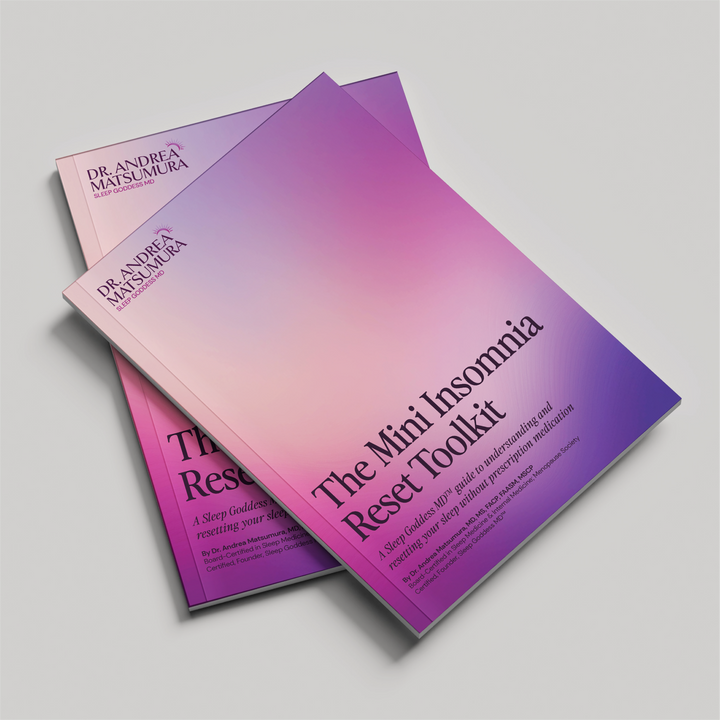
The Mini Insomnia Reset Toolkit
If you are exhausted from lying awake at night, waking up at 2 to 4 a.m. with a racing mind, or dreading bedtime because you do not trust your body to sleep, you are not alone. Millions of women in midlife experience insomnia, yet most are left navigating it in silence, feeling broken and defeated.
How an Evening Walk Fits Into the D.R.E.A.M. Sleep Method™ and Helps You Sleep Through the Night
Sleep is not an isolated event that begins the moment your head hits the pillow; it’s the outcome of a series of daytime processes. One simple but potent behavior that influences multiple pillars of sleep physiology and psychology is an evening walk. A post-dinner walk does more than aid digestion—it supports your nervous system, helps regulate internal clocks, and enhances your overall readiness for restorative sleep.
Here’s how it maps to the D.R.E.A.M. Sleep Method™:
D — Daily Habits: building sleep drive and habitual rhythm
Evening walking supports two important pieces:
- Sleep drive: gentle movement contributes to the natural “pressure” to sleep at night.
- Rhythm: walking around the same time each evening becomes a repeated signal that the day is winding down.
Over time, that consistency can make bedtime feel less abrupt—like your body is arriving there naturally, not being forced into it.
R — Resting Environment: cues for calm and transition
Your “environment” includes the lead-up to sleep. Walking at dusk can provide subtle light and routine cues that help your body shift into nighttime mode. It’s also a boundary: stepping out of the house (or away from screens) reduces stimulation and helps create a clearer transition into rest.
E — Emotions: calming stress and nervous system activation
Many people come to bedtime with high stress, high mental load, or an overactive mind. Gentle walking helps the body downshift toward “rest-and-digest,” which supports both falling asleep and staying asleep. The steady, rhythmic nature of walking is part of what makes it uniquely regulating.
A — Archetype: aligning your internal clock
Timing affects people differently. For most, a moderate evening walk supports sleep—especially when it’s not intense and not right before bed. If you’re someone who gets energized easily, the adjustment is simple: walk earlier, keep it shorter, and keep it gentle.
M — Medical Conditions: metabolic and digestive benefits
Some nighttime wake-ups are driven by physiology: reflux, bloating, glucose swings, and hormonal shifts can all fragment sleep. A post-dinner walk can help settle digestion and support steadier overnight metabolic patterns—reducing common triggers for waking.
Evidence, timing, and practical application
The goal is a 10–30 minute stroll at a relaxed pace—enough to support sleep drive and downshift stress, without elevating your core temperature or heart rate too close to bedtime. For many people, 10–20 minutes is the sweet spot.
Putting it together: ritualize, don’t rush
The real value of an evening walk isn’t just the movement—it’s the consistency and integration into your sleep system. Treat the walk as part of a sleep-supportive ritual: pair it with dimming lights when you get home, a tech-free wind-down period, or gentle stretching. This helps close the gap between daytime stress and the restorative state your nervous system needs at night.
The Mini Insomnia Reset Toolkit
If you are exhausted from lying awake at night, waking up at 2 to 4 a.m. with a racing mind, or dreading bedtime because you do not trust your body to sleep, you are not alone. Millions of women in midlife experience insomnia, yet most are left navigating it in silence, feeling broken and defeated.